


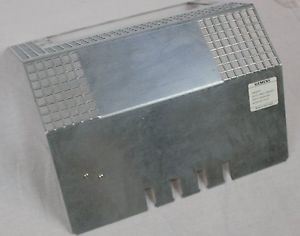

The Siemens part number 6XG3400-2CK00 is a component commonly used in industrial automation systems, particularly in the field of process control and manufacturing. This component is a type of programmable logic controller (PLC) that is designed to manage and monitor industrial processes, as well as control and regulate various equipment and systems.
Technical Specifications:
- The Siemens 6XG3400-2CK00 PLC is a compact, high-performance controller that supports up to 16 digital inputs and 16 digital outputs.
- It has a CPU with a clock speed of 24 MHz and 64 KB of RAM.
- The PLC supports a variety of communication protocols, including Profibus, Profinet, and Modbus.
- It has a built-in web server for remote monitoring and configuration.
Alarm/Error Codes:
- The Siemens 6XG3400-2CK00 PLC has a built-in error detection system that can detect and report various types of errors, such as communication errors, power failures, and configuration errors.
- The PLC also supports user-defined alarm and error messages, which can be configured to alert operators of specific issues or conditions.
User Manuals:
- The official user manual for the Siemens 6XG3400-2CK00 PLC is typically provided by the manufacturer or supplier and is usually available in both electronic and printed formats.
- The manual provides detailed information on the PLC's features, installation, configuration, and troubleshooting procedures.
Troubleshooting:
- Troubleshooting the Siemens 6XG3400-2CK00 PLC typically involves identifying and resolving issues related to communication, power supply, or configuration errors.
- The PLC has a built-in diagnostic tool that can be used to identify and troubleshoot common issues.
Programming:
- The Siemens 6XG3400-2CK00 PLC supports a variety of programming languages, including Ladder Logic, Function Block, and Structured Text.
- Programming can be done using a range of software tools, including Siemens' own programming software or third-party tools.
Installation:
- Installation of the Siemens 6XG3400-2CK00 PLC typically involves connecting the controller to a power source, configuring communication protocols, and setting up the PLC's inputs and outputs.
- It is recommended that installation be performed by a qualified technician or engineer to ensure proper configuration and operation of the PLC.